

Information Only

Backstory:
Glub embodies an unfortunate reality of gluten free dining: gluten free isn’t always gluten free.
When gluten free meals are prepared alongside gluten-containing foods, it can be difficult to entirely remove the risk of exposure. Not because of intentional carelessness, but because kitchens are busy, labels are imperfect, and gluten is very good at hiding. So when gluten ends up where it shouldn’t, triggering unwanted symptoms, we blame Glub playing tricks in the kitchen.
When someone’s health relies on avoiding gluten, this uncertainty can make it hard to feel at ease when trusting someone else to get it right. The worry that lingers even after asking all the right questions? That’s Glub, lurking.
Where you’ll find Glub:

Travel &
Holidays

Restaurants
& Cafes

Social
Occasions

Conferences
& Work Events

Festivals &
Other Events
Special Skills:
- Turning up uninvited
- Lurking in the background
- Playing tricks in the kitchen
- Disrupting plans
Dislikes:
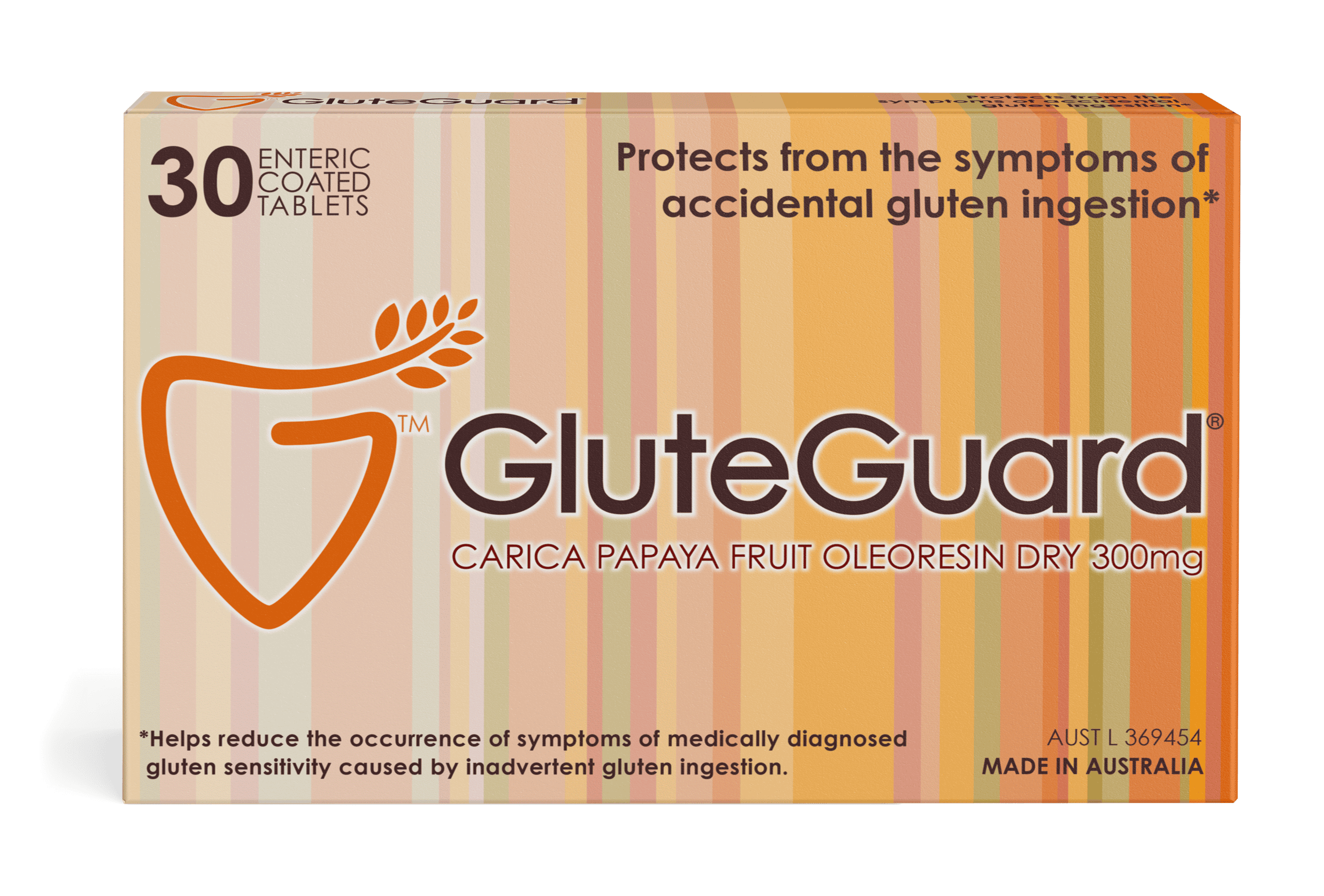
With GluteGuard’s protection,
Glub doesn’t get a seat at
the table.
Scroll down to find out how ↓

Outsmart Glub.Outsmart gluten.
GluteGuard offers reinforcement for the gluten free diet, helping people approach gluten free dining, social occasions, and travel with greater confidence.
as a protective measure
when there’s a risk of
accidental gluten ingestion
helping to reduce the
occurrence of symptoms
a naturally-derived enzyme
found in unripe papaya skin,
suitable for regular use
coeliac disease1 and
dermatitis herpetiformis2